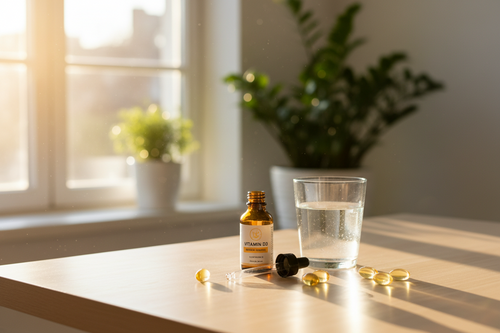
Vitamin D is fat-soluble, which means it absorbs into the bloodstream most effectively when consumed alongside dietary fat.* Take it on an empty stomach and a meaningful portion of the dose can pass through without ever reaching your blood.
The 25-hydroxyvitamin D level on your blood test depends on two things: how much you take, and how much of that actually gets in. The second part is where most people leak.
WHY FAT MATTERS
Vitamin D dissolves in fat, not water. To get from the digestive tract into the bloodstream, it needs to be packaged into micelles, the bile-salt and fat droplets the body uses to ferry fat-soluble nutrients across the intestinal wall.* Without dietary fat in the gut, micelle formation is poor and absorption drops.
Once across the intestinal wall, vitamin D travels through the lymph attached to chylomicrons, the lipoproteins that carry fat-derived molecules.* Water-soluble vitamins like vitamin C don't need this machinery. Fat-soluble vitamins do.
WHAT THE RESEARCH SHOWS
Three clinical studies set the reference here.
A 2010 Cleveland Clinic study published in the Journal of Bone and Mineral Research followed 17 patients who weren't responding to vitamin D treatment despite high doses. When researchers had them take the same supplement with the largest meal of the day, average serum 25(OH)D levels rose by roughly 50%. Same dose. Different timing.
A 2011 randomized trial in the International Journal of Endocrinology gave 32 healthy adults a single 50,000 IU dose of vitamin D3 with either a high-fat meal (25.6 g of fat) or a low-fat meal (1.7 g of fat). After 14 days, mean serum 25(OH)D was 53.7 nmol/L in the high-fat group and 33.7 nmol/L in the low-fat group. The gap came from the fat in the accompanying meal.
A 2015 Tufts University study in the Journal of the Academy of Nutrition and Dietetics ran a similar test on 50 healthy older adults. Vitamin D3 absorption was significantly greater with a fat-containing meal versus a fat-free one. The fat-free group's serum levels rose less, full stop.
WHAT THIS MEANS IN PRACTICE
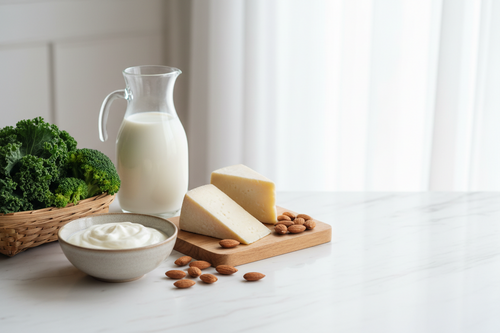
If your supplement is a dry capsule, pill, or tablet, take it with a meal that contains fat. Avocado, nuts, olive oil, salmon, eggs, full-fat dairy. Anything with a reasonable lipid load gets the bile and chylomicron machinery moving.
If you're taking vitamin D first thing in the morning with black coffee, or as part of a fasted routine, the same dose will produce a smaller blood-level bump.* The pill isn't the issue. The lack of fat is.
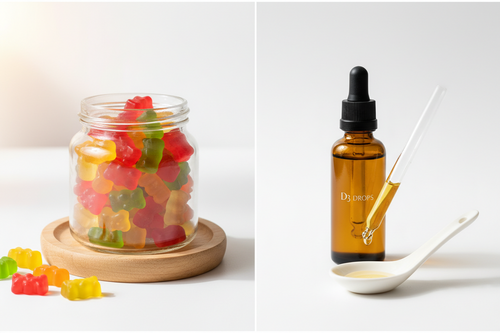
There is a second path: take the vitamin D already dissolved in fat. A liquid vitamin D supplement formulated in an oil base delivers the vitamin and the fat together, in the same dose. The fat needed for micelle formation is right there in the dropper.* No timing required.
WHY OLIVE OIL
Vitamin D pairs well with monounsaturated fats. Olive oil is the cleanest, most food-grade option that ticks every box: a stable, single-ingredient lipid, used in human diets for thousands of years, and free of the processed seed-oil residues that show up in cheaper carriers. The 2015 Tufts study also noted that fat composition mattered, with monounsaturated-to-polyunsaturated ratios influencing absorption.*
D3X uses an organic olive oil base for that reason. Vitamin D3 and K2 sit in the oil. You take a drop. The fat goes in with the vitamin.
Three ingredients. One habit. Time to get serious about your D.
Sources
Frequently Asked
Should you take vitamin D with food?
Yes, especially food that contains fat. Vitamin D is fat-soluble, and clinical studies show absorption is significantly higher when the supplement is taken with a fat-containing meal versus an empty stomach. A 2010 Cleveland Clinic study found that taking vitamin D with the largest meal of the day raised average serum 25(OH)D levels by about 50% versus other timings.
Why does vitamin D need fat to be absorbed?
Vitamin D dissolves in fat, not water. To cross from the digestive tract into the bloodstream, it needs to be packaged into micelles, the bile-salt and fat droplets the body uses to absorb fat-soluble nutrients. Without dietary fat, micelle formation is poor and a meaningful portion of the dose passes through without being absorbed. Once absorbed, vitamin D travels through the lymph attached to lipoproteins called chylomicrons.
How much fat do you need to take with vitamin D?
A 2011 randomized trial in the International Journal of Endocrinology compared a meal with 25.6 g of fat to one with 1.7 g and found a major absorption difference after 14 days. A 2015 Tufts study found that even a moderate fat-containing meal significantly outperformed a fat-free meal. The exact threshold varies, but a meal containing avocado, nuts, eggs, olive oil, full-fat dairy, or fatty fish generally provides enough.
Is liquid vitamin D in oil better absorbed than capsules?
Liquid vitamin D supplements formulated in an oil base deliver the vitamin and the fat together in the same dose, which means the fat needed for micelle formation is already present. Dry pills, capsules, and tablets rely on the fat in the stomach from a meal. Both can work if taken correctly, but a pre-formulated oil-based liquid removes the need to time the supplement with a fatty meal.
What is the best fat to take with vitamin D?
A 2015 Tufts University study found that fat composition mattered, with the monounsaturated-to-polyunsaturated fatty acid ratio influencing absorption. Olive oil is a stable, food-grade monounsaturated fat used as a carrier in some vitamin D supplements. Other meal fats that work include avocado, nuts, eggs, full-fat dairy, and fatty fish.